A recessed well drops the coil into the frame; a cradle sits it on top. Which one suits your coil diameter, weight and route, and how the clamps are sized.
A recessed well is a channel let into the deck along the length of the trailer — 0.8 m wide and 0.13 m deep on ours — so the coil sits down inside the frame rather than on top of it.
Two things change when you do that. The centre of gravity drops by the depth of the well plus most of the coil's contact radius, which is what makes the vehicle stable with a very dense load sitting high. And the load path goes into the main beam directly, instead of crossing the deck plate on its way there.
That second point is the structural argument. Deck plate is not a load-bearing member; it is a surface. A coil resting on it transfers its whole mass through sheet steel into whatever is underneath. A coil sitting in a well transfers it into the beam that was designed to take it.
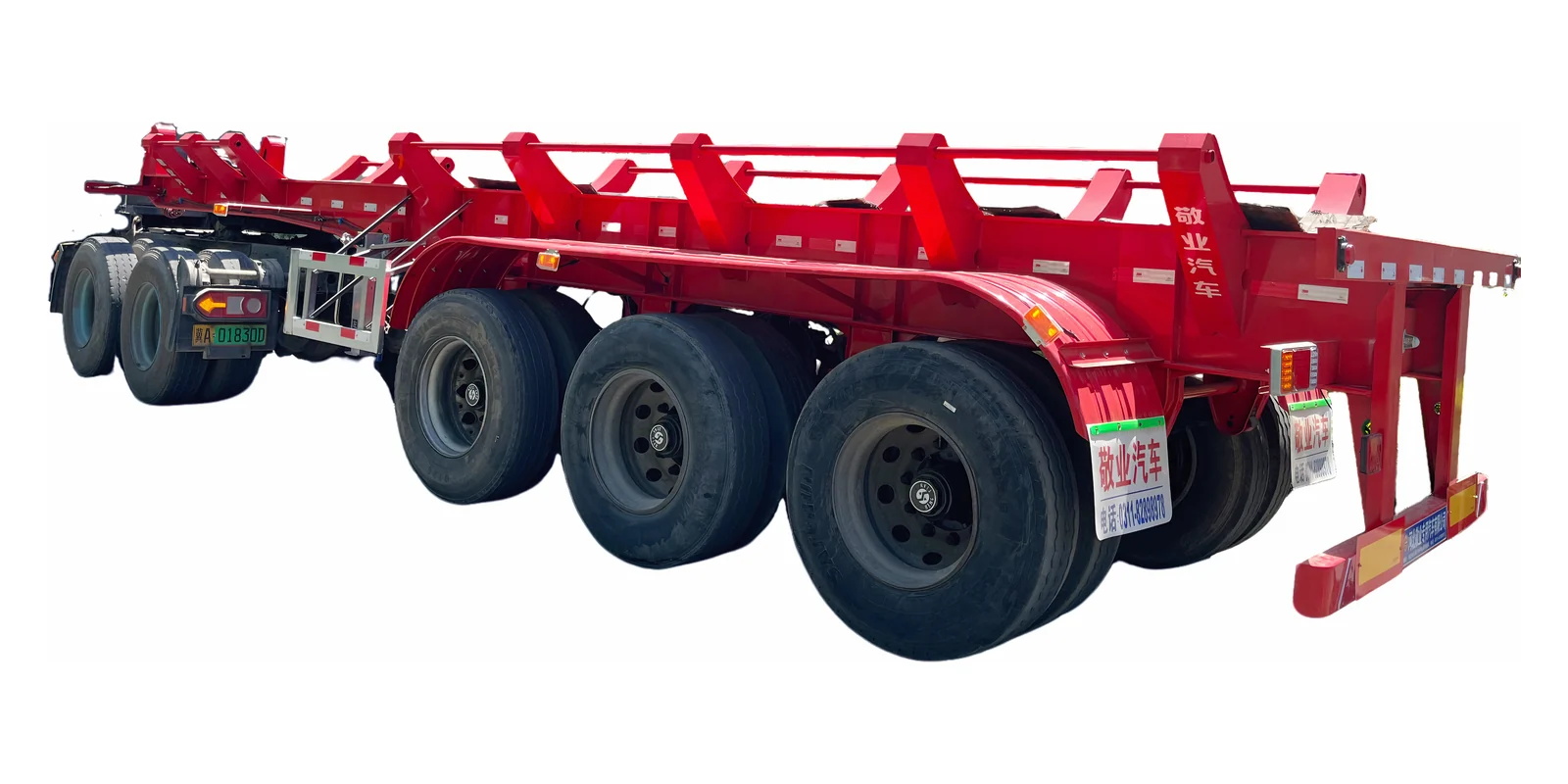
A cradle sits the coil in a saddle on top of a flat deck. It is the right answer in three situations.
When the trailer has to do other work. A well is permanent; a flat deck with removable cradles goes back to being a flat deck when the coil traffic stops.
When your coil diameters vary widely. A well is dimensioned around a range. Cradles can be swapped or repositioned.
When coils are occasional rather than constant. If coil is one job in ten, a dedicated well trailer will spend most of its life carrying a channel it does not need.
The trade is that a cradle sits the load higher and puts more of the restraint job onto what you strap over the top.
The clamps are what stop the coil rotating and walking under braking. Ours have a 2.2 m outer diameter and can be re-sized to the coil you actually run.
This is not a detail to leave to the standard fit. A clamp sized for a larger coil than yours closes on air; a clamp sized for a smaller one will not close at all. A coil that begins to move at speed does not stop at the headboard — it goes through it, and the load then decides where the vehicle is going.
Tell us the diameter range you actually carry, not the largest coil you have ever seen, and the clamps get sized to it.
Suspension on a coil trailer is specified against the load rather than picked from a house standard. We build leaf packs of 4, 7, 8, 10 and 13 leaves.
Coil is dense, and dense loads punish suspension in a way that bulk cargo does not: the same mass arrives through a much smaller footprint, and every joint in the road becomes a hammer blow rather than a push. A pack sized for a general-freight trailer will settle and then fatigue under coil work.
Two numbers get it right: the heaviest coil you run, and the worst road you run it on.
| Model | PJY9400TYC |
|---|---|
| Overall dimensions | 9500 / 9000 / 8500 / 8000 × 2500 × 2100–1800 mm |
| Tare weight (manufacturer's stated) | 5400 / 5250 / 5000 kg |
| Coil capacity (manufacturer's stated) | 3 coils, up to 27 t each |
| Maximum coil diameter | 1.9 m |
| Coil well | 0.8 m wide × 0.13 m deep |
| Coil clamp | 2.2 m outer diameter, re-sizable to the coil |
| Suspension | 4 / 7 / 8 / 10 / 13-leaf spring packs |