Gooseneck or straight frame? Loaded height, fifth-wheel match and ramp profile decide it. Both frames are built on one line and specified to your own tractor.
A gooseneck frame steps down behind the king pin, so the deck behind the step sits lower than the fifth wheel. Everything a gooseneck is bought for follows from that one geometric fact.
The box rides lower. Loaded height comes down by the depth of the step, and loaded height is what decides whether you clear a terminal ramp, a bridge on the approach road, or a height limit written into a permit. On routes where you are close to a limit, that step is the difference between running and not running.
The trade is stiffness and simplicity. A stepped beam has a transition in it, and a transition is a place where a frame has to be engineered rather than just rolled. Built properly it is a non-issue; it is simply why a gooseneck is not automatically the better frame.
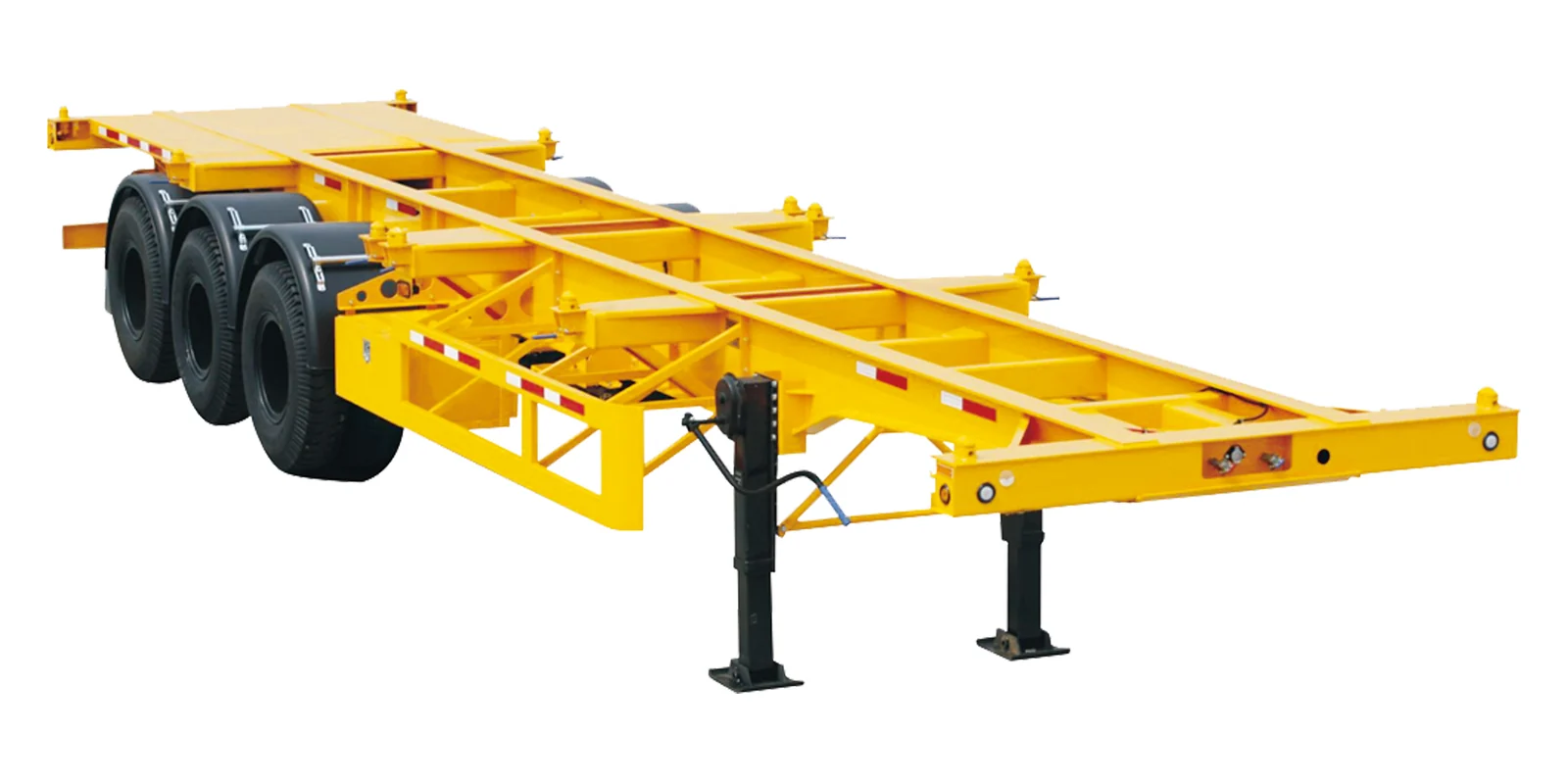
A straight frame runs level from the king pin to the rear. No step, no transition, one continuous beam section.
That makes it the simpler vehicle to build and the simpler one to keep straight over a long life on bad surfaces. It also sits the box a little higher, which is only a disadvantage if you are near a height limit — and is an advantage if you regularly work with ground-level handling equipment that wants the corner castings up rather than down.
If your routes have headroom and your terminals are flat, the straight frame is usually the one to buy.
Neither frame can be chosen without one number from your side: the fifth-wheel height of the tractor that will pull it.
Fifth-wheel height plus frame geometry gives you the deck height; deck height plus box height gives you the loaded height that has to clear everything on your route. Get the pairing wrong and you end up with a legal trailer that cannot use half your network.
Send us the fifth-wheel height and the tightest clearance on your regular route, and we will specify the frame to it rather than guess.
Both frames are built on the same line from the same plate, and they share the running gear, the lock arrangement options and the certification. The specification table on the hub page covers both; what differs between them is the beam profile and the resulting deck height.