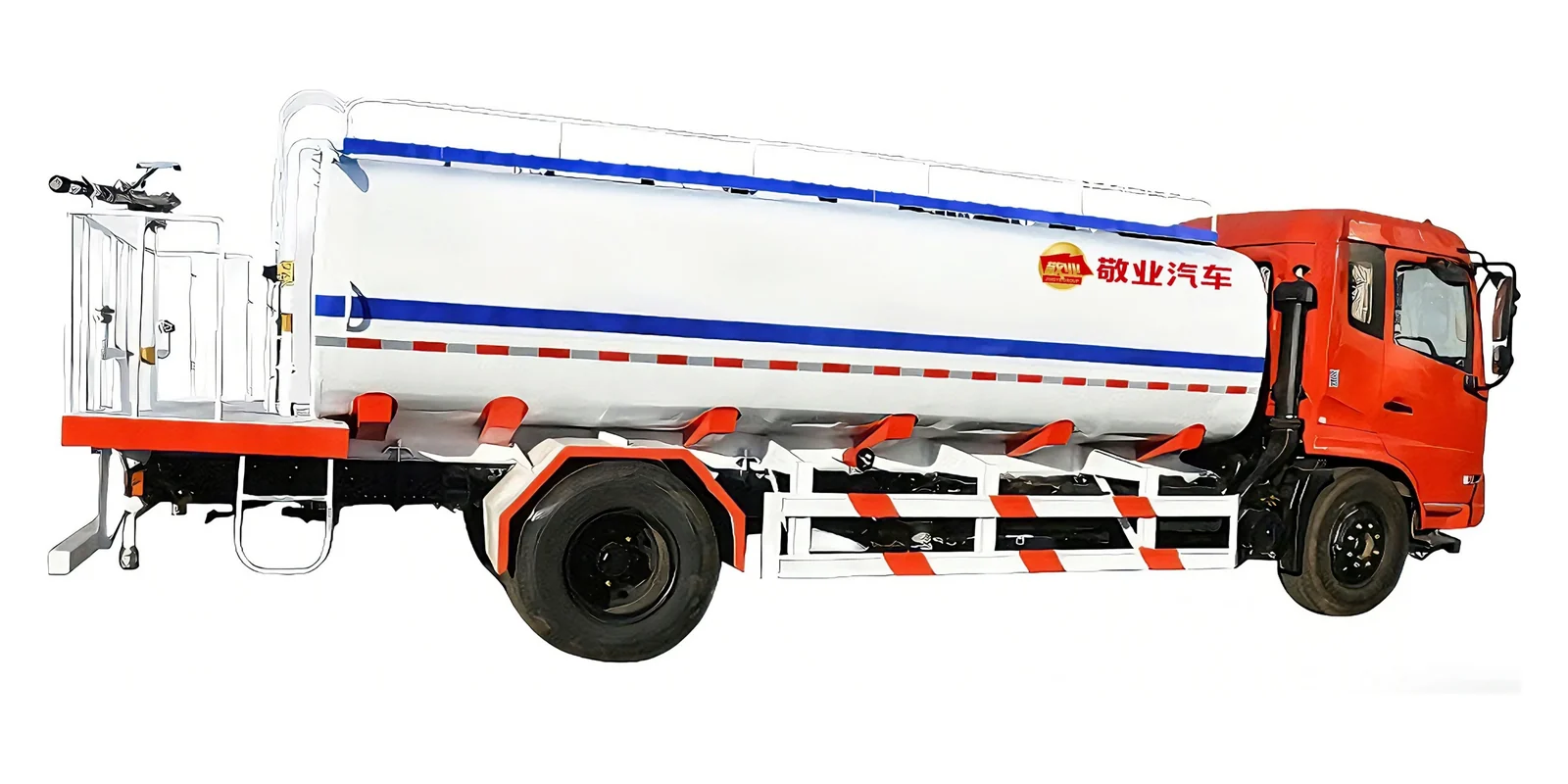
Water tanker and bowser trucks built to your tank capacity, pump and spray configuration — haul road dust control, site damping, street washing and water delivery.
One body, four jobs. A water tanker earns its keep differently depending on who buys it. On a mine haul road it is dust control. On a construction site it is damping and compaction water. In a municipality it is street washing. In much of Africa and the Middle East it is simply water delivery, where the mains are intermittent and a bowser is the supply.
We build it to your configuration, not from a catalogue. Tank capacity, pump rating, spray head layout, hose reel, filling method and chassis are specified per order. That is how special purpose vehicles are actually sold — the tank is the easy part; matching it to your road, your water source and your duty cycle is the job.
“Water tanker” and “water bowser” describe the same vehicle in different English-speaking markets. In South Africa, India, the UK and much of the Commonwealth, a water bowser is what North America calls a water truck — and the word change usually comes with a different specification list, because the jobs those markets buy it for are different.
What changes between configurations is not the tank so much as everything attached to it: how you fill it, what pressure you need at the outlet, whether the spray goes down at the road or out at a working face, and whether the water has to be fit to drink at the far end.
We build to the configuration rather than from a catalogue, so the useful conversation starts with what the vehicle has to do on your site.
We do not publish a capacity list, and that is a deliberate choice rather than an omission.
Tank size is decided by three things that belong to your site, not to ours: how far the vehicle travels between fills, how fast it discharges when it is working, and what the ground will carry when it is full. A tank that is right for a short haul road with a hydrant at one end is wrong for an off-grid site where the nearest water is a river draw twenty minutes away. Quoting you a capacity before we know those three things would be guessing with your money.
The capacities page sets out what decides the size, and the five questions we need answered before we can quote properly.
Behind the vehicle. Built on 200,000 m2 with seven production lines and our own steel, by a plant with a current capacity of 10,000 units a year (100,000 planned). If you want to see it before you commit, we will walk the line with you on camera.
Tell us the tank capacity, the duty and the destination country, and we will specify the pump, the spray layout and the chassis.