Tank capacity is decided by your water source, your route and your duty cycle, not by a catalogue page. Here is what we need to know before we size it.
Most manufacturers publish a ladder of tank sizes and let you pick one. We do not, and it is worth being straight about why rather than leaving you to assume the page is unfinished.
We have not been able to establish a set of standard capacities for this line that we would be willing to publish as fact. Putting a ladder of numbers on this page would mean inventing the rungs — and a capacity figure a buyer plans around is not a place to guess.
What we can do is size a tank to your duty, which is how special purpose vehicles are actually sold anyway. The tank is the easy part; matching it to your road, your water source and your shift pattern is the job.
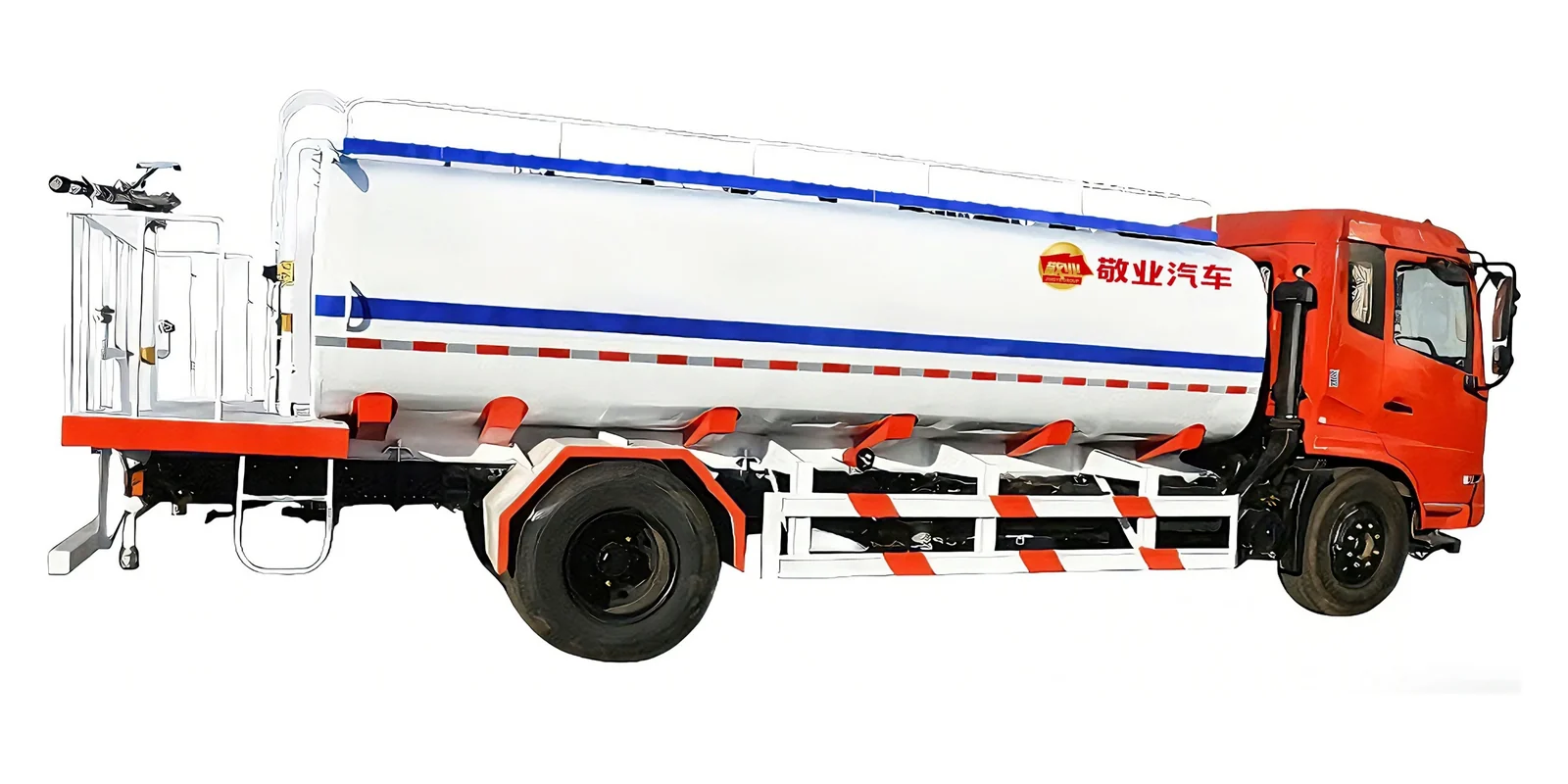
Four things, and none of them are ours.
Distance to water. The further the fill point, the more each trip has to carry to be worth making. A site with a hydrant at the gate and a site with a river draw twenty minutes away want different vehicles.
Discharge rate. How fast the tank empties when the vehicle is actually working. A high-coverage spray duty empties a tank in a fraction of the time a delivery duty does.
Ground bearing. A full tank is the heaviest the vehicle will ever be, and on unmade ground or a gradient the limit is what the surface will carry, not what the chassis will.
Shift pattern. How many working hours between refills you need to cover. This is the one buyers most often work out last and should work out first.
Turnaround — the time from empty back to working — is usually a bigger constraint on output than tank size, and it is the one people leave out of the calculation.
A larger tank that takes twice as long to fill from a low-pressure source can deliver less water per shift than a smaller one filling from a hydrant. If your fill is slow, the useful lever is often the pump and the coupling rather than the tank.
Tell us how you fill and how far the fill point is, and the sizing conversation becomes arithmetic instead of preference.
1. Tank capacity you need, and whether it is potable or non-potable duty
2. What you are doing with the water — dust suppression, washing, or delivery
3. How you fill it — hydrant, standpipe, river draw or bowser transfer
4. The road and gradient it will work on
5. Destination country, so we can confirm what is required to register it there