In South Africa, India and the UK a water bowser is what North America calls a water truck. Same vehicle, different word — and a different specification list.
In South Africa, India, the UK, Ireland and much of the Commonwealth, a water bowser is what North America calls a water truck. Same vehicle, different word — and the word usually arrives with a different specification list, because the jobs those markets buy it for are different.
In North America the dominant duty is dust control on haul roads and construction sites, and the vehicle is specified around spraying. In much of Africa, South Asia and the Middle East the dominant duty is delivery — the mains are intermittent or absent, and the bowser is the supply. That vehicle is specified around filling, carrying and discharging cleanly, not around spray coverage.
If you write "water truck" to a supplier who works in bowser markets, you will usually get a spray-configured vehicle. It is worth saying which job you mean.
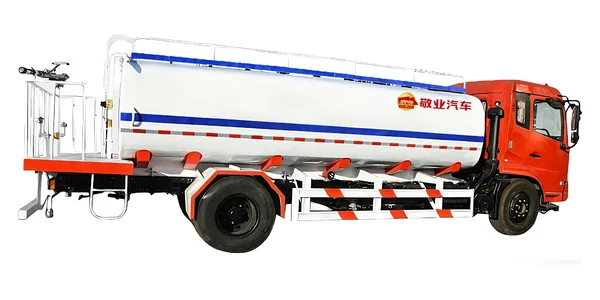
How you fill decides more of the specification than most buyers expect.
Hydrant or standpipe. Pressurised supply, fast turnaround, and the vehicle needs the right coupling and a fill point that suits the site. Straightforward.
River or dam draw. No pressure at the source, so the vehicle has to lift the water itself. That means a self-priming pump with enough suction lift for the bank you are working from, and strainers sized for what is in the water.
Bowser transfer. Filling from another tank rather than from a supply. Common on sites where one large unit feeds several smaller ones.
These are not interchangeable pump specifications. Tell us how you will fill it and the pump follows; ask us for a pump without telling us and we are guessing.
Whether the water has to be fit to drink at the far end is a question about the tank, not about the vehicle.
This is one we have to ask you rather than answer for you. Potable duty depends on the tank material and lining, and on what certification your destination requires for it. Tell us whether the water is for consumption, and which country it will be registered and used in, and we will confirm what we can build and what we would need to source.
Non-potable duty — dust control, damping, washing, irrigation, construction water — carries none of those constraints and is what most of these vehicles do.