What air bags change on a loaded trailer: ride quality, load sharing between axles, ride-height control and where a leaf pack is still the better answer.
An air bag is a reinforced rubber bellows between the axle and the frame, filled with compressed air. The air column carries the load; the rubber contains it.
The property that matters is that air is a soft spring and steel is a hard one. A leaf pack gets stiffer as it deflects, so an empty trailer on leaves rides harshly — the springs were sized for a load that is not there. An air bag holds roughly the same rate whether the trailer is loaded or empty, because the system adds air to keep ride height rather than compressing the spring.
That single difference is where most of the ride improvement comes from, and it is most obvious empty rather than loaded.
This is the part that is worth money rather than comfort.
On a leaf-sprung bogie, how load divides between the axles is decided by the geometry and by the road surface at that instant. Hit a rise with the leading axle and it briefly carries more than its share. Over a long life on poor roads, that unevenness shows up as one axle's tyres and brakes wearing faster than the other's.
On air suspension the bags on a bogie are connected, so pressure equalises between them and each axle carries close to the same share regardless of what the surface is doing. Tyres wear more evenly, brakes wear more evenly, and — where axle loads are policed individually — you are less likely to be over on one axle while under on another.
An air system controls its own height, which gives you two things a leaf pack cannot.
Ride height control. A levelling valve senses the frame height and adds or releases air to hold it, so the deck sits at the same height empty and loaded. For anything that loads at a fixed bay height, that is worth more than the ride quality.
A dump valve. Release the air and the trailer sits down, which lowers the deck for loading and makes coupling and uncoupling easier on uneven ground.
The maintenance consequence: the levelling linkage is a mechanical part in an exposed place, and it gets knocked. If a vehicle rides low or high, check the linkage before you suspect the bags.
Air suspension is not the upgrade path. It is a different set of trade-offs, and for a good deal of the work these trailers do, leaves win.
Nothing to fail. No bags to chafe, no lines to split, no valves to stick, no linkage to knock out of adjustment. On a vehicle working far from a workshop that is a serious argument.
Repairable anywhere. A broken leaf is a known repair for any commercial workshop. An air fault needs someone who has seen one.
Tolerant of abuse. Leaves accept overloading and rough handling that would shorten a bag's life considerably.
On our coil trailer, leaves are the specification — packs of 4, 7, 8, 10 or 13, sized against coil weight and road. A dense load on bad roads is exactly the duty where a leaf pack earns its place.
Air-ride is available where it makes sense and is not offered where it does not.
Fitted as standard: the fence trailer runs lightweight air suspension, because a high-volume light-density load benefits from the ride and the vehicle is not usually working the hardest surfaces.
Available as an option: the dry van, where load fragility and bay-height loading both favour it.
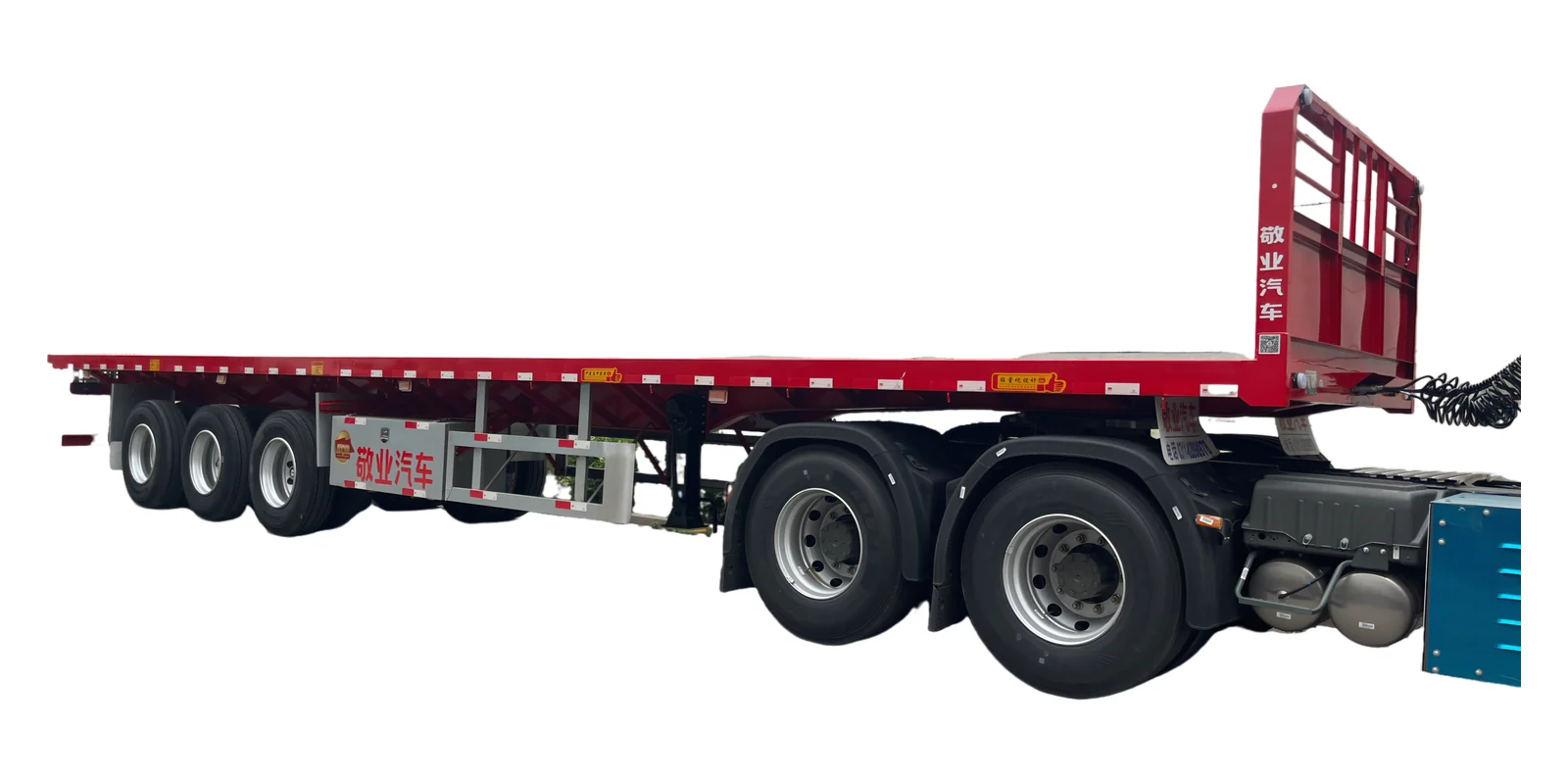
Leaf pack as standard: the flatbed, the coil trailer and the tippers, where the duty and the surfaces favour simplicity and durability.
If you want a configuration outside that, ask — the answer is usually yes with a reason attached, and occasionally no with a better reason.