Superlink dropside combinations as Southern African operators actually run them: lead and rear trailer pairing, axle loads and the panel configuration to order.
A Superlink is two trailers pulled by one tractor: a lead trailer coupled to the fifth wheel, and a rear trailer coupled to the back of the lead. It is the standard long-haul configuration in South Africa and its neighbours, and it exists because the regional length and mass regulations reward it.
The two units are not identical. The lead trailer carries the coupling for the rear and takes load from it; the rear trailer runs on its own axles behind. That difference shows up in the frame, in the axle arrangement and in how each unit is loaded.
A dropside body suits the configuration because it loads from the side along the whole length — which is what you want when the pair is standing on a yard and both units have to be filled quickly.
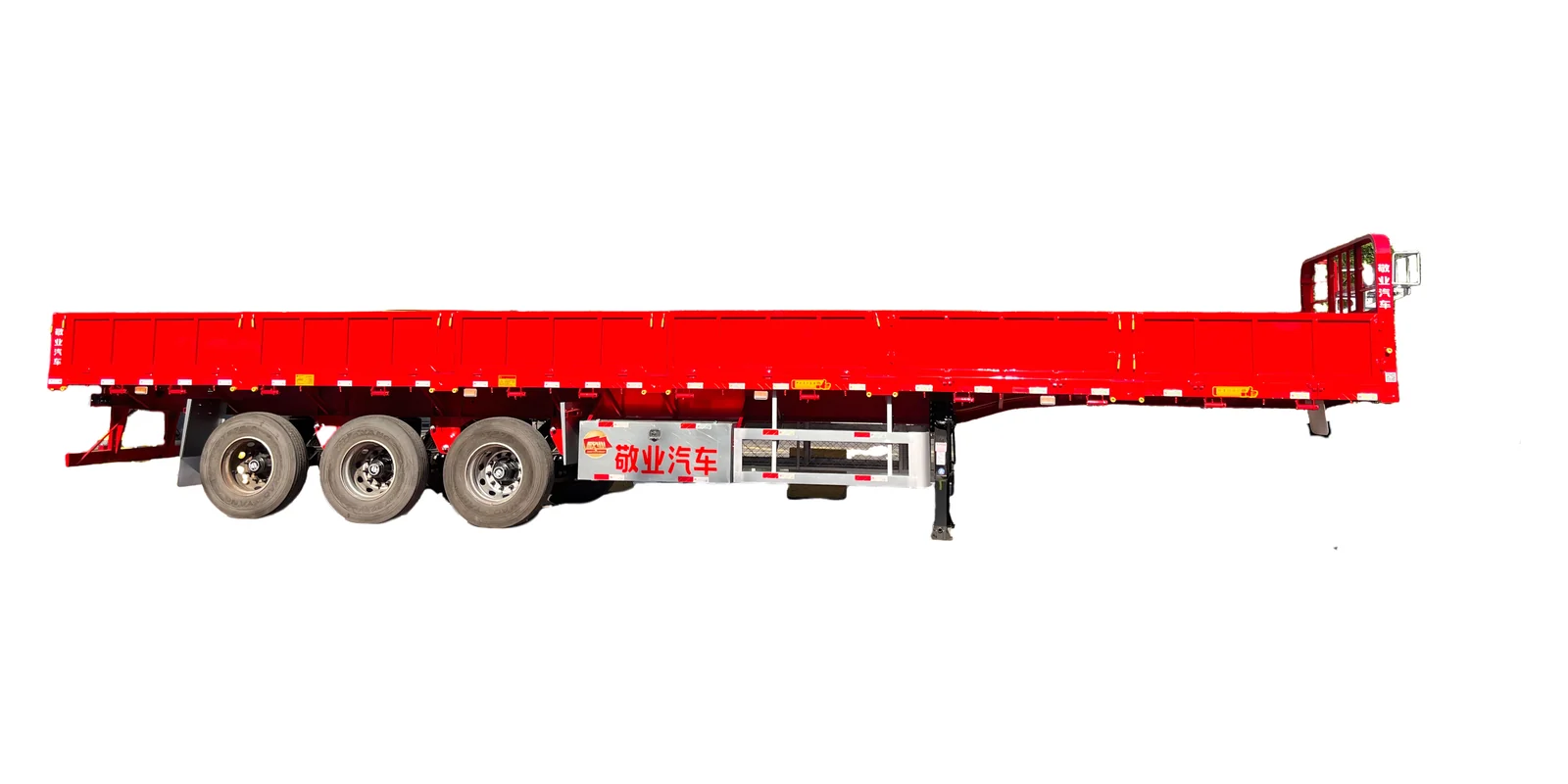
The four side-panel configurations we build — removable, fold-down, welded fixed and split-opening — can be specified differently on the lead and the rear unit, and often should be.
The usual reason is access. The lead trailer sits behind the tractor with less room to swing a panel; the rear trailer is clear. Operators who load with a side crane frequently take removable stanchions on both, while operators strapping by hand take fold-down on the unit that is loaded most often and welded fixed on the other.
Tailgates are specified independently of the sides on each unit.
The point of a Superlink is mass, and mass is governed by the axle arrangement and the regulations of the country you run in — not by what the trailer could physically carry.
What that means practically: the specification conversation for a pair starts with your permissible combination mass and your axle configuration, and works backwards to the trailer. Body length, panel configuration and suspension all follow from that; none of them can be settled first.
We do not publish a permissible mass for a market we have not certified into. Tell us the country and the configuration you run, and we will confirm what we can and cannot state for it before you order.
Four things get a pair specified properly: the permissible combination mass you run to, the axle configuration, what you haul, and how it is loaded. Send those and we will come back with a configuration for the lead and the rear unit rather than a catalogue page.
If you are comparing suppliers, the video tour settles the factory question first — twenty minutes on camera, on the line where the frames are welded.